
Technical issues can make it harder for search engines to access, understand and index your website. Technical SEO identifies and resolves these problems so your site has a stronger foundation for search visibility and performance.
A website can look great to visitors and still have technical issues behind the scenes.
Technical SEO helps make sure search engines can access, understand and process your website properly.
Strong search visibility starts with a website search engines can access, understand and index.
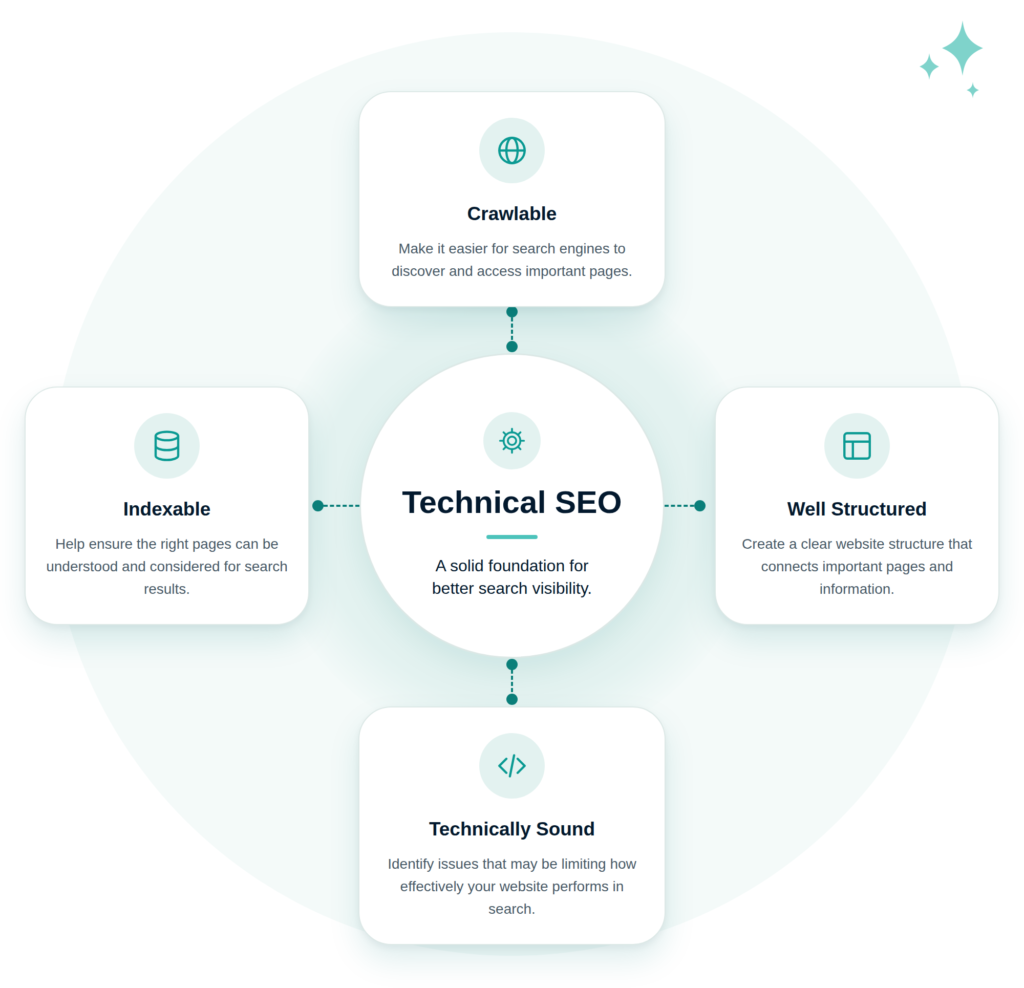
Technical problems can limit search performance even when your website looks good and has strong content.
Find technical issues that may prevent important pages from performing as they should.
A faster, more reliable website creates a better experience across devices.
Make sure strong content isn't being held back by problems behind the scenes.
Build a technical foundation that can support your website as it expands.
Technical SEO removes barriers between your website and the search engines trying to understand it.


Search Engines Discover Your Website
Crawlers need to access your pages and follow your website structure.
Your Pages Are Processed
Search engines interpret your content, signals and page relationships before deciding what can be indexed.
Eligible Pages Can Compete
When important pages are accessible and indexable, they have the technical foundation needed to compete in relevant search results.
Technical SEO focuses on the behind-the-scenes elements that affect how search engines access, understand and index your website.
It identifies technical barriers.
Issues with crawling, indexing, redirects or website structure can prevent important pages from being discovered or processed correctly.
Technical improvements help create a website that works more efficiently for both search engines and users.
Crawlability & Indexing
Make sure important pages can be discovered, accessed and considered for indexing.

Create clear connections between pages so search engines can better understand your website.
Address technical factors that affect speed, usability and overall site experience.

When search engines can efficiently access, process and understand your website, your content has a stronger technical foundation to perform in search.
Every website has different technical priorities, so the work starts with identifying the issues that matter most to your site.
Technical SEO focuses on removing barriers, improving website health and creating a stronger foundation for organic search.
Check whether important pages can be discovered, crawled and indexed correctly.
Review page hierarchy, navigation and internal structure to make important content easier to discover.
Review the signals that help search engines understand which areas of your website they should access.
Assess page experience and performance issues that may affect usability across devices.
Identify broken links, redirect issues and outdated URLs that can disrupt users and search engines.
Review and implement relevant structured data where it can help search engines better understand your content.
Review canonical signals to help search engines understand the preferred version of similar or duplicate pages.
Monitor technical health and identify new crawling, indexing or performance issues as your website changes.
Your website needs to be accessible so search engines can discover and crawl important pages.
Clear structure and technical signals help search engines interpret your pages and how they relate to each other.
When technical barriers are reduced, your content has a stronger foundation to compete in search.
Technical SEO doesn't replace great content. It helps create the foundation that allows great content to do its job.
Technical SEO becomes especially important when website issues are getting in the way of search performance or making it difficult to understand what needs fixing.
If technical issues are making it harder for search engines or users to navigate your website, it's worth finding out what's happening behind the scenes.
Key pages are missing from Google or taking longer than expected to appear in search.
A redesign, migration or platform change can introduce redirects, broken URLs and other technical issues.
More pages, products or locations can make website structure and indexation more complex.
Slow pages, mobile usability problems or other technical issues are affecting the website experience.
Your content may be strong, but underlying technical problems could still be limiting search performance.
Technical SEO tools can uncover hundreds of issues, but not every warning deserves the same attention.
I look at what is actually affecting your website, prioritise the issues that matter and recommend changes with a clear purpose.
No endless technical checklists. No fixing things just for a green score. Only practical improvements that have a reason behind them.

Understand the issue, its cause and whether it is genuinely affecting your website.
Focus first on problems that can affect crawling, indexing, usability or search performance.
Make technical recommendations because they solve a real problem, not simply because a tool produced a warning.
Review the impact of improvements and watch for new technical issues as your website evolves.
Technical SEO FAQs
Technical SEO focuses on the behind-the-scenes elements of your website that affect how search engines crawl, understand and index your pages.
Common signs can include important pages not being indexed, crawl errors, broken URLs, redirect problems or poor website performance. Some issues are less obvious and may only become clear through a technical review.
Technical SEO can remove barriers that may be limiting search performance, but fixing technical issues alone does not guarantee higher rankings. Content quality, relevance, competition and other SEO factors also matter.
Possibly. A website can work well for visitors while still having crawling, indexing, canonicalisation or structural issues that are not immediately visible on the front end.
Yes. I can identify and prioritise technical SEO issues and work with your existing developer where development changes are required.
Some issues can be fixed once, but websites change over time. New pages, redesigns, migrations, plugins and platform updates can introduce new technical issues, so ongoing monitoring can be useful.
Find and fix the technical issues that may be holding your website back, with a clear plan focused on what actually matters.